MRSA Treatment with Vancomycin: Dosing and Targets
MRSA vancomycin dosing targets AUC₂₄ 400–600 mg·h/L, learn site-specific durations, MIC thresholds, and when to switch agents.
Quick Answer: Target AUC₂₄/MIC ≥400 mg·h/L for MRSA (assuming MIC ≤1 mg/L). Duration depends on source: 2 weeks for uncomplicated bacteremia, 4–6 weeks for endocarditis, 6+ weeks for osteomyelitis. If vancomycin MIC ≥2 mg/L or the patient isn't improving at 5–7 days, switch to daptomycin or linezolid.
MRSA vancomycin dosing isn't one-size-fits-all. The target AUC₂₄ is the same across indications, 400–600 mg·h/L, but the duration, monitoring intensity, and decision to switch agents all depend heavily on where the infection is.
Why Vancomycin Remains First-Line for Serious MRSA
Vancomycin has been treating MRSA for over 60 years, and despite its limitations, it remains the agent of choice in IDSA MRSA guidelines (2011, still referenced) and ASHP/IDSA 2020 vancomycin consensus guidelines for serious infections. The reason isn't that it's the best drug pharmacokinetically, it's that the evidence base, clinical experience, and accessibility are unmatched.
It's bactericidal against S. aureus by inhibiting cell wall synthesis (specifically binding D-Ala-D-Ala precursors). It doesn't have the resistance concerns that make beta-lactams useless against MRSA. And it's available everywhere, inexpensive, and pharmacists know how to dose it.
The catch: it works best when dosed aggressively to target, and it fails when the MIC is too high or tissue penetration is too low.
The AUC/MIC Target and MIC Creep
The pharmacodynamic target for vancomycin against MRSA is an AUC₂₄/MIC ratio ≥ 400. With an MIC of 1 mg/L, the susceptibility breakpoint that most clinical MRSA isolates fall at, targeting AUC₂₄ of 400–600 mg·h/L achieves that ratio and keeps nephrotoxicity risk acceptable.
When MIC = 2 mg/L, the math breaks down. To hit AUC/MIC ≥ 400, you'd need an AUC₂₄ ≥ 800 mg·h/L. That's well above the range associated with nephrotoxicity. Multiple studies confirm clinical failure rates rise substantially when MRSA MIC reaches 2 mg/L, even when vancomycin concentrations are "therapeutic."
This phenomenon, sometimes called "MIC creep", has been documented in MRSA isolates at multiple medical centers over time. When your clinical microbiology lab reports an MIC of 2 mg/L, don't push vancomycin harder. Switch. Talk to infectious disease. The drug isn't going to work well enough to justify the kidney risk.
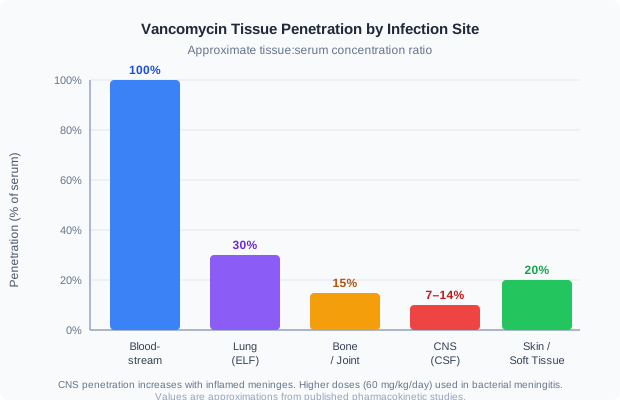
Infection-Site Differences in Dosing and Response
Where the infection is determines how much drug reaches the target, and how long you'll need to treat. See our AUC/MIC ratio post for the underlying pharmacodynamic theory.
Bloodstream infection (bacteremia). Vancomycin achieves essentially 100% exposure in the bloodstream, it doesn't need to penetrate anywhere. MRSA bacteremia is still a high-mortality condition (30-day mortality 15–30% in observational data). Target AUC₂₄ 400–600 mg·h/L from the first dose; consider a loading dose (25–30 mg/kg), then use our MRSA vancomycin dose calculator to determine maintenance dosing based on the patient's renal function. Duration is a minimum of 14 days for uncomplicated bacteremia; 4–6 weeks for complicated or persistent.
Infective endocarditis. Vancomycin penetrates cardiac valve vegetations poorly, fibrin and bacterial density limit drug access. The IDSA recommends 6 weeks of treatment for native valve endocarditis, 6+ weeks for prosthetic valve. Some clinicians add rifampin for prosthetic valve endocarditis (rifampin penetrates biofilm better), but this is controversial and the data are mixed.
Pneumonia. This is vancomycin's weakest indication for MRSA. Lung penetration averages only 20–30% of serum AUC. At a serum AUC of 500 mg·h/L, you're delivering roughly 100–150 mg·h/L to the pulmonary epithelial lining fluid. Against an MIC of 1 mg/L, that might work. Against MIC = 2 mg/L, it almost certainly won't. Duration is 7–14 days for hospital-acquired or ventilator-associated MRSA pneumonia.
Bone and joint infections. Bone penetration of vancomycin is approximately 10–15% of serum concentration, similar to or slightly better than lung. Prolonged therapy (4–6 weeks for osteomyelitis) is required because bone vascularity is poor and biofilm-forming S. aureus is difficult to eradicate. Many infectious disease specialists transition to oral agents (linezolid, trimethoprim-sulfamethoxazole, or clindamycin if susceptible) after initial IV therapy.
Meningitis / CNS infections. CNS penetration is 7–14% in inflamed meninges, the highest it gets, thanks to inflammation disrupting the blood-brain barrier. Even so, you're fighting a concentration uphill battle. IDSA guidance allows vancomycin for MRSA meningitis but recommends high serum AUC targets (some experts suggest AUC₂₄ 550–650 mg·h/L) and considering intraventricular vancomycin in refractory cases. Duration is typically 10–14 days minimum, guided by CSF culture clearance.
When to Switch from Vancomycin
Switching is indicated when:
MIC ≥ 2 mg/L. As discussed, the pharmacodynamic math doesn't work. Switch to daptomycin (for bacteremia and endocarditis), linezolid (for soft tissue and pneumonia, though not endocarditis), or ceftaroline (for bacteremia in some centers). Consult infectious disease.
Persistent bacteremia at 72 hours. Blood cultures still positive after 3 days of appropriate dosing with confirmed susceptibility? Consider adding or switching. Endovascular source must be excluded (get an echo), but persistent bacteremia despite adequate vancomycin is a failure signal.
Vancomycin-induced nephrotoxicity. Defined as a ≥ 0.5 mg/dL or ≥ 50% increase in serum creatinine from baseline on two consecutive measurements. If nephrotoxicity occurs and the infection still requires treatment, daptomycin is generally the preferred agent, it's renally cleared but not nephrotoxic in the way vancomycin is.
Clinical non-response at 5–7 days. Fever, leukocytosis, bacteremia not clearing, or clinical deterioration despite therapeutic AUC. Source control must also be confirmed (drain any abscesses, remove infected hardware if possible).
Combination Therapy: What the Evidence Shows
Adding rifampin to vancomycin for MRSA infections is one of the most studied and most debated topics in ID pharmacy. The theory: rifampin penetrates biofilm and has excellent intracellular activity. The reality: clinical trials (most notably the ARREST trial in prosthetic joint infections) have not shown consistent benefit, and rifampin induces CYP3A4 dramatically, creating drug-drug interactions that complicate management.
For most situations, combination therapy with vancomycin is not standard of care. The exception is CNS infections where some centers add rifampin for its superior CNS penetration. Use our vancomycin dosing calculator to model AUC targets before and after dose changes.
Practical Takeaways
MRSA vancomycin dosing requires knowing three things before you write the order: the MIC (if available), the infection site, and the patient's renal function. The AUC₂₄ target is 400–600 mg·h/L, get to it quickly in serious infections, monitor it with Bayesian estimation, and don't hesitate to switch when the pharmacodynamics say the drug won't work.
For more on the specific endocarditis dosing approach, see our vancomycin endocarditis dosing post.